


Books to improve your AI-powered marketing and content
The real risk of AI: producing average content faster
If you want to get the most out of AI in your marketing and content, start here.
Most people use AI by slapping it on top of their existing workflow and hoping it makes everything better. Usually it just makes average content faster.
The real opportunity is different: AI forces you to rethink how you think.
These books help you go back to fundamentals and rebuild your marketing and content process from the ground up. Once those foundations are strong, AI becomes a powerful tool.
The 3 things I refuse to change when using AI
AI has changed a lot about how I work. But there are a few things I refuse to outsource.
→ Thinking still happens with pen and paper
Before I write anything, I still grab a pen and paper and write down the key message for my readers: why should they care and why does it matter?
AI can help shape the content, but the core idea still needs to come from clear thinking.
→ I obsess over formatting
Busy readers scan before they read. That’s why formatting matters.
Short paragraphs, strong subheads, whitespace, and clear structure make the difference between content that gets ignored and content that actually gets read.
→ I always review content in the real context
My final check always happens in situ, exactly how the audience will see it.
That means reviewing the content on a mobile screen, with the visuals included, and in the actual environment where it will be published.
Because great content isn’t just about the words. It’s about how the whole experience feels to the reader.
Let's start reading these books.
Improve your content production process: 'Everbody writes' by Ann Handley
If you’re stuck writing or struggling to produce content, start with this book. Everybody Writes is one of the most practical guides to writing for marketers. Ann Handley breaks writing down into simple, actionable ideas you can apply immediately.
It includes 11 hands-on tips and techniques that help you move from staring at a blank page to actually producing something useful. This is also one of the few books I keep in physical form on my shelf—and I only loan it out with a significant deposit.
Some ideas that stuck with me:
- “Giving your audience a gift—how can you best serve them, with a mindset of generosity?” (p29)
- “Produce the ugly first draft: that’s basically where you show up and throw up. Write badly. Write as if no one will ever read it.” (p30)
- “Start with ‘Dear Mom’ and keep a real person in mind. Someone you like, because you want to help this person.” (p55)
The key takeaway: great content starts with empathy and clarity. AI can help you write faster, but it still needs a human who understands the audience.

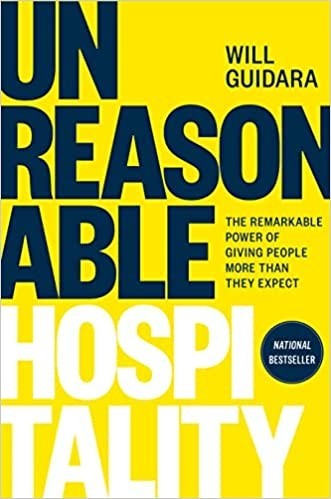
Adding experience and emotion to your content: ‘Unreasonable Hospitality’ by Will Guidara
This book is a gem. At its core, Unreasonable Hospitality is about how you make people feel and challenging the status quo to deliver something better.
Although the book is rooted in the hospitality industry, the lessons apply just as well to brands, marketers, agencies, and employers.
One idea that really stuck with me is the 95–5 rule. Be frugal with 95% of what you do, but splurge on the 5% that truly matters—the details that create an unforgettable experience.
For marketers, that might be the unexpected follow-up, the thoughtful detail in a campaign, or the extra effort that makes your brand memorable.
Because in the end, great marketing isn’t just about information. It’s about experience and emotion.
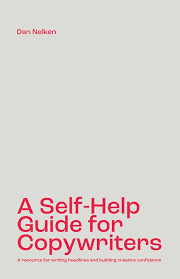
People buy the result, not the feature: 'A Self-Help Guide for Copywriters' by Dan Nelken
Another gem for anyone working with words. A Self-Help Guide for Copywriters is packed with creative techniques to help you write better headlines and unlock your creativity.
One of Dan Nelken’s most useful ideas is thinking in buckets. Instead of trying to come up with one perfect idea, you generate many ideas across different angles or categories. This makes creativity much more systematic and much less intimidating.
My favorite concept from the book is “the benefit of the benefit.”
It works like this:
- If you buy a playhouse for your kids, the benefit is that they’ll have fun playing in it.
But the benefit of that benefit? You finally get some peace and quiet.
- Or if you buy a new bed for your dog, the benefit is that your dog sleeps comfortably.
The benefit of the benefit? Your hairy dog stops sleeping on your bed.
In other words, people rarely buy the product itself. They buy the deeper outcome behind it.
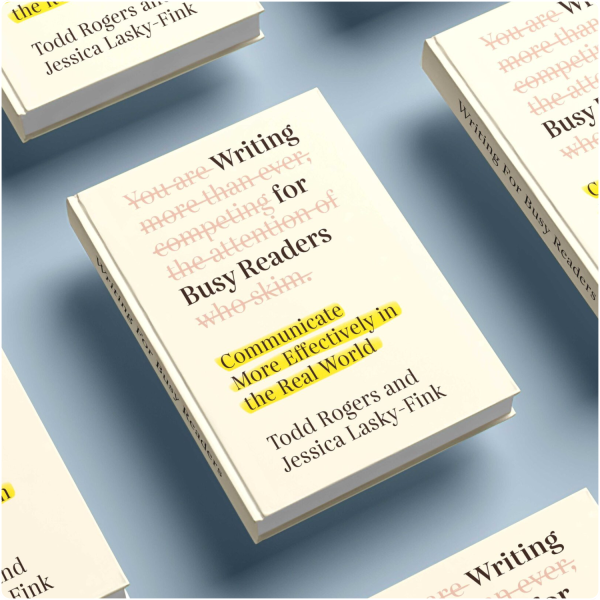
People don't read, they hunt for information: ‘Writing for Busy Readers’ by Todd Rogers and Jessica Lasky-Fink
People are busy. Your readers included.
If your writing is hard to read, they simply won’t read it.
In Writing for Busy Readers, Todd Rogers and Jessica Lasky-Fink explain how to communicate more effectively by simplifying your writing.
The book introduces six principles for clear communication:
- Less is more
- Make reading easy
- Design for easy navigation
- Use enough formatting—but no more
- Tell readers why they should care
- Make responding easy
These principles apply everywhere: emails, landing pages, reports, proposals, and marketing content.
Honestly, this book is a must-read for everyone, from the CMO and senior marketing manager to the content producer and intern.
Final thought
AI is an incredible tool for marketers. But tools are only as powerful as the thinking behind them.
If you strengthen your fundamentals; how you write, think about value, communicate clearly, and create great experiences—AI will amplify those skills.
If not, it will simply help you produce average content faster.
And nobody really needs more of that.
→ If you are hungry for more reading? Check out my full booklist for marketers.
Join 2,500+ professionals reading my weekly newsletter and stay ahead in marketing, content, and AI with insights that actually matter
It’s free, genuinely valuable, and you can unsubscribe at any time. No spam. No noise. No overhyped thought leadership.
Simple as that.
 Powered By PressPage