

Cannes Lions 2025, the top 10 cases combining creativity and technology
Not just inspiration, the new standard. The bar isn’t raised, it’s redefined.
Cannes Lions, the yearly rose-infused festival in the sunny south of France. Office tigers' best excuses to lounge in the sun, meet new people, and make friends. Just a few of them have a festival pass, and even fewer sift through all the cases. However, I did.
→ After digging through 50+ case studies, 25+ blogs and whitepapers, and just as many content by creators and publishers on socials, podcasts, and webinars, I pulled together what I think are the best cases from Cannes 2025, and give context on what that means for 2026.
Actually, there are 15 cases in random order, not 10. I just couldn't choose. Check the last paragraph for all credits.
Trend for 2026: ‘Unshittification’, intentionality, and escapism
Riding the ‘being human’ wave from 2025, we're still moving forward. It’s just more integrated, less showy.
Now adding the ‘unshittification’. We're done. We're fed up with the AI-generated and automated fakeness. We're numbed by the algorithm fixing that results in more of the same content. We're tired of the fast-paced microtrends.
→ We're done with the AI and the fake. More than ever, we move toward ‘intentional’. We want to escape the fake and polished, and go ‘back’ to the ‘old school’ real, authentic, personal attention, human connection, and meaning. Which all does feel seamless and effortless, thanks to modern technology.
This puts more weight on brand identity over pure performance, and on the power of bold, simple ideas that truly stand out. Show up, consistently, frequently, and with a long-term mindset. Not just a one-off.
For marketing and content strategists, this isn’t just inspiration; it’s the new standard. And the bar is not just raised, but redefined.
1. ‘AXA, Three Words’ turns home insurance into a lifeline for domestic-violence survivors
→ How 3 words change a boring insurer from a commodity to a lifesaver
Through its “THREE WORDS” campaign, AXA France added a no-cost emergency relocation guarantee to every home-insurance policy. Any woman at risk, whether named on the contract or not, can be moved to safe housing immediately, eliminating the paperwork and financial hurdles.
Because home insurance is mandatory in France and AXA is the market leader, the benefit reaches households nationwide. Survivor testimonies show the policy’s power to provide safety and a fresh start. Celebrated at Cannes Lions 2025 for its social impact, the initiative redefines what insurance can—and should do, positioning AXA as a genuine ally against domestic violence.
2. ‘Caption with intention’ reinvents captions as a powerful storytelling tool
→ Using design and animation to bring words to life
This caption with intention, by the Chicago Deaf Society, is finally putting deaf and hard-of-hearing viewers at the center of the experience.
For the first time in 50+ years, captions get a meaningful upgrade. This design system adds emotion, tone, and timing through dynamic animations, varied text weights and sizes, and color-coded speaker cues. It makes dialogue easier to follow and brings the feel of a scene, not just the words, to life.
With over 430 million people depending on captions, this isn’t just innovation. It’s inclusion by design.
3. ‘Tenessee sounds sites’ where artists bring alt txt to life
→ Accessibility meets sensibility
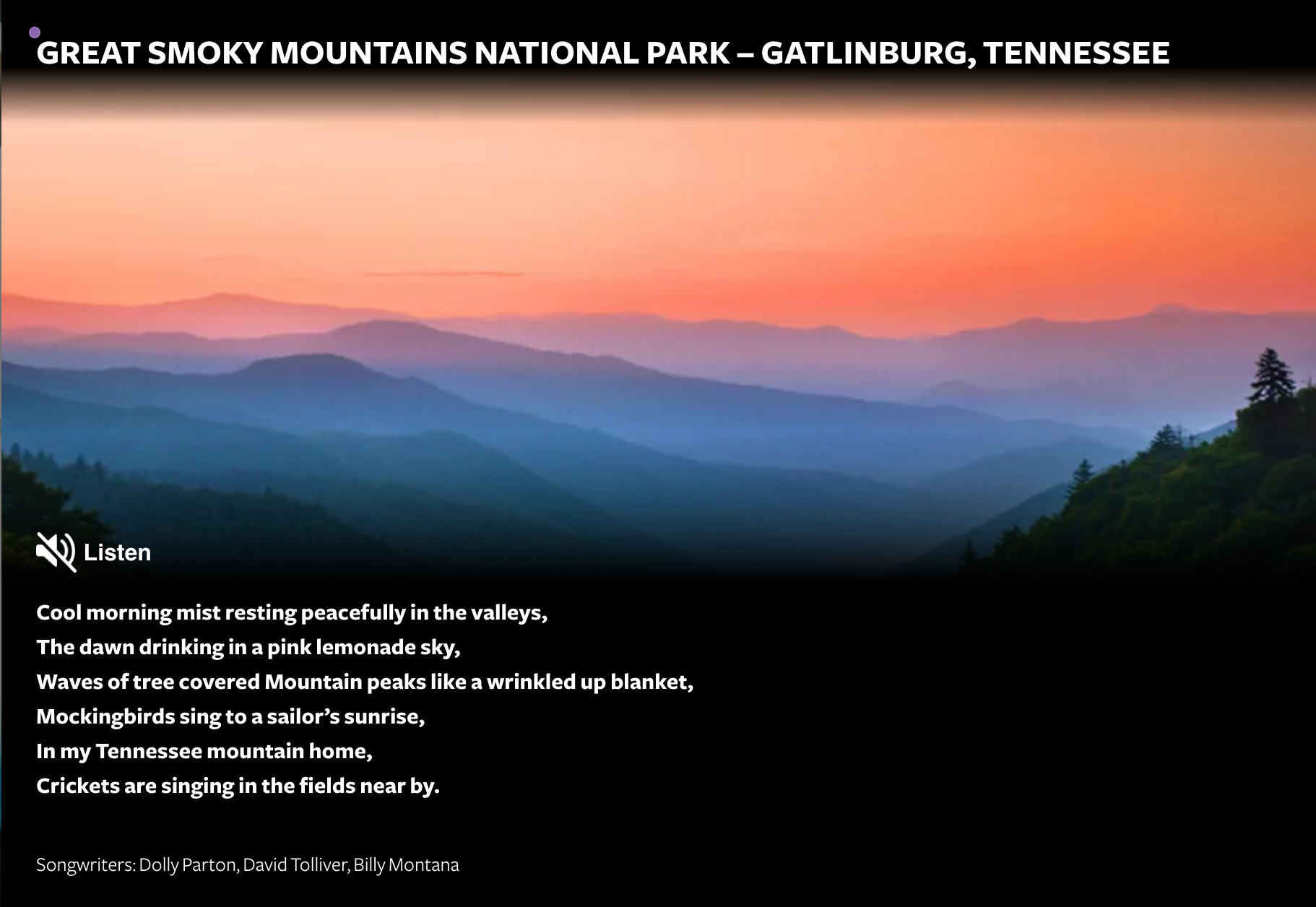
Tennessee songwriters collaborated with blind communities to craft authentic, lyrical descriptions for hundreds of Tennessee images, redefining travel accessibility. Providing descriptive lyrics instead of standard alt-text. Better image descriptions for better experiences.
Experience it yourself on tnvacation.com
This won a Bronze Lion in the category of copywriting.
4. ‘Pedigree Camarelo’ turns the most common mutt into the most adopted breed
→ Using DNA data for good and changing perceptions, as well as long-term brand building and consistency
By giving Caramelos official pedigree certificates based on DNA, Pedigree turned overlooked mutts into national icons. The campaign began when a celebrity’s Caramelo was rejected from a dog show, sparking public debate. And even updated their packaging to feature one. With influencer support, media buzz, and official recognition, Caramelos has become a celebrated symbol of inclusion.
And Pedigree is consistent in showing up in this domain, the ‘Selfie Stix’ won a Lion in 2017, and last year's Adoptable, using AI to make dogs more adoptable.
5. ‘Amazon Greenventory’ blends AI, drones, and community to turn deforestation into regeneration
→ Using data for good; win for the forest, win for the locals, win for the brand
Faced with severe biome loss, Natura developed a smart mapping system that identifies tree species and sustainable harvesting zones across the Amazon.
What once took years of manual research can now be achieved in just months, thanks to the use of drones and AI, which unlock precision at scale. The data is handed to local communities, empowering them to earn long-term income without harming the forest.
Natura guarantees to buy everything they harvest, creating a closed-loop model where community growth fuels forest renewal and product innovation. A partnership to turn deforestation into regeneration—economically and ecologically.
6. ‘Dove Real Beauty,' how a soap brand created a global self-esteem movement for 20 years
→ Brand building is a long-term game that pays off if done consistently
It began in 2004 with a bold insight: only 2% of women considered themselves beautiful. Dove challenged the industry’s narrow ideals by celebrating confidence over perfection, sparking one of the first viral marketing movements.
Through the Dove Self-Esteem Project, the brand became the world’s largest provider of self-esteem education, reaching millions of young people. Dove didn’t stop at ads; it backed real change, supporting laws like the Crown Act against hair discrimination, and fighting toxic beauty standards on social media.
This long-term commitment reshaped public perception, turning Dove into a $7.5 billion brand and one of the world’s most influential platforms for body confidence and inclusive beauty.
7. Dove, ‘Real beauty redefined for the AI era’
→ Using content to influence what AI labels as beauty, Dove keeps showing up, frequently and consistently over 20 years
Dove defends real beauty in a digital age. As AI-generated influencers flood social feeds, Dove raises a red flag: these figures may look real, but they’re entirely artificial, and they’re reshaping how people see themselves. One in three individuals would change their appearance, even knowing the images they’re chasing aren’t real.
Building on its 20-year mission to redefine beauty, Dove’s latest campaign challenges the next frontier of unrealistic standards. The rise of AI adds complexity, but the brand stays grounded in its core belief: authentic beauty matters more than ever.
In this campaign, Dove goes one step further, not just speaking to people, but to the algorithms themselves. By intentionally feeding more diverse and realistic beauty representations into the system, the brand aims to influence how AI and algorithms define beauty, ultimately shaping what shows up in the feed.
8. ‘L’Oreal', the final copy of Ilon Specht was a feminist breakthrough (1971)
→ Long-term brand building, four words that challenged the status quo of the beauty industry
Ilon Specht’s "Because I’m worth it" wasn’t just a slogan; it was a feminist breakthrough.
In a male-dominated advertising world of the 1970s, Ilon Specht, a young female copywriter, challenged the status quo by crafting four words that gave women agency in beauty decisions. ‘Because I’m worth it’ became a quiet but powerful act of rebellion: beauty no longer for male approval, but for self-affirmation.
This short documentary retraces how her frustration with misogynistic norms led to a line that empowered millions of women to own their choices. Despite resistance, like an agency insisting on a male voiceover, the slogan stood strong, rewriting the rules of how women were spoken to in media.
More than 50 years later, Specht’s words still echo as a timeless feminist message, proving that authenticity and self-worth aren’t trends, they’re movements.
9. ‘Sounds Right’ turned nature into a Spotify artist, with a long-term payment stream
→ Using data and payment systems to generate income for nature
Launched on Earth Day, this bold campaign gave Mother Nature an official Spotify artist profile, allowing anyone to support biodiversity simply by streaming. Every time you listen to natural soundscapes or music featuring nature sounds, royalties are funneled directly into conservation efforts through a UN-backed advisory board. Listening turns into long-term conservation funding.
→ feat. NATURE (Spotify playlist)
Top artists credited Nature as a co-creator, integrating environmental recordings into their music. With over 150 million streams and 14 million listeners, Nature quickly entered Spotify’s top 1% most-played artists.
Crucially, this model created a sustainable, ongoing payment stream for global biodiversity projects, offering a fresh path for environmental funding that scales with culture, not charity. A great collaboration between the Museum for the United Nations and Spotify.
10. ‘Penny’ price packaging locks in the price in times of inflation
→ Creative thinking and innovation by design, not by technology
During a period of steep inflation, Penny offered long-term price stability on everyday essentials by locking prices permanently by printing them directly on the packaging. ‘If you print it on the package, you can’t change it.’
This is a bold act of transparency. Turning groceries into trust markers, helping shoppers plan and budget with confidence, and reinforcing Penny’s image as a reliable, people-first retailer.
11. ‘Lucky Yatra’ turned train tickets into lottery tickets
→ Creative thinking and flipping perspectives
Indian Railways turned a frustrating economic problem into a culturally resonant opportunity, transforming each valid train ticket into a lottery ticket, incentivizing honest fare purchase. It wasn’t just a campaign, it was a behavioral nudge built on local insights. It reframed compliance as reward, not punishment.
Nearly 40% of the 24 million daily passengers were riding without paying, and enforcement alone wasn’t working. So instead of cracking down, they tapped into something deeply rooted in Indian society: the love of lotteries.
India has a $33 billion lottery market. For many, playing the lottery is a daily ritual offering hope, excitement, and the chance of life-changing wins, often for just a few rupees. By transforming each valid train ticket into a lottery entry, Indian Railways flipped the script:
- Ticket evasion became a missed opportunity.
- Buying a ticket now came with emotional and financial upside.
- And every ride felt like a chance to win, literally.
The execution was smart, too. Daily and weekly cash draws using ticket serial numbers. No added cost or extra steps for passengers. And targeted launch at 24 high-traffic stations, maximizing impact
The Lucky Yatra campaign was questioned for running too briefly, but Cannes Lions checked it and confirmed it was real.
12. ‘Bad Bunny’ merges tech, music, and national pride into one unforgettable digital experience
→ Combining data and technology with creative brilliance to counter an insult
‘Floating garbage’ was the insult. What followed was one of the most powerful cultural comebacks ever staged. When a U.S. nitwit labeled Puerto Rico as “an island of garbage,” Bad Bunny and his team flipped the narrative, using music, maps, and tech to turn it into a celebration.
At the heart of the campaign was geo-coordinated storytelling. They mapped over 100 real locations across Puerto Rico, beaches, streets, plazas, and iconic local spots. Each song is linked to a place, each place redefined by its sound. Each is a piece of Puerto Rican identity. These precise coordinates were integrated with:
Google Maps. Users could enter a set of GPS coordinates and be dropped into a physical location across Puerto Rico, not to view it through the eyes of disaster or poverty, but through art, pride, and music. The pins weren’t just markers; they became cultural anchors.
Spotify Integration. Each location unlocked a custom track by Bad Bunny, accessible only through that geo-tag. By moving digitally across the map, fans pieced together an album—part music, part manifesto. The island became a living playlist.
The result was more than a tribute. It was a statement. Not just creative brilliance, it's how it merged tech, music, and national pride into one unforgettable digital experience.
13. ‘Vaseline Verified’ becomes the voice of reason in a world of viral beauty hacks
→ Adding value by verifying and debunking myths in UGC makes the brand a cheeky authority
In a landscape dominated by TikTok trends, Vaseline takes a bold stance, putting internet beauty hacks to the test. By scientifically verifying (or debunking) popular DIY skincare tricks, the brand positions itself as a credible, no-nonsense skincare authority.
“Vaseline hunted down viral DIY skincare hacks on TikTok/Instagram, enlisted 450+ creators to recreate them, ran each tip through an on-camera lab test that either stamped it with a blue-tick Vaseline Verified badge or debunked it, then boosted the verified clips - complete with swipe-to-shop links - driving 63.3 million interactions and turning the brand into skincare’s trust referee.” (quote Callum McCahon)
"5 reasons why Vaseline Verified is modern brand building at its best
- It’s democratised distinctiveness. Community made. Brand owned.
They observed how the community interacts with the brand, handed over the keys, but without sacrificing brand codes. In fact, they’ve strengthened them. - It deals with the duality of UGC
UGC is great for reach, risky for messaging. The brand becomes an arbiter of trust. By verifying the genuine hacks, the brand instantly discredits the dodgy ones. - It’s delivered at genuine scale. Earned + Owned + Paid integration. 450+ creators. Media spend behind it for visibility beyond existing audiences. 63.3 million interactions. Organic alone won’t cut it.
- It’s a platform with stretch. Social-first platforms don’t have fixed boundaries. They evolve as momentum builds, creating real longevity for the brand.
- It combines brand and product: mixing brand building and sales activation on social with shoppable tags—a shift that challenges the old belief that you can't do both in one piece of content. Drove a 43% increase in eCommerce sales. Social commerce = brand + product in one."
(Credits Callum McCahon)
Partnering with content creators, Vaseline evaluates everything from beard care routines to band-aid beauty hacks. Safe ones earn the official “Verified by Vaseline” status, along with a playful trophy box, while dangerous ideas are publicly “unverified.”
The campaign cleverly showcases Vaseline’s versatility, from protecting lips and cuticles to even healing a dog’s dry nose. In doing so, the brand doesn’t just correct misinformation—it reinforces its role as a trusted, science-backed staple in daily care routines.
14. ‘B2B; Act like you know’ by GoDaddy
→ There's absolutely no legit reason B2B should be boring
A campaign with actor Walton Goggins used humor and AI to launch a real sunglasses brand, showing how anyone, regardless of experience, can confidently start a business with GoDaddy Arrow. The campaign blended entertainment with product utility, earning billions of media impressions and demonstrating the power of merging story, personality, and tech utility.
At its core was GoDaddy Arrow, an AI tool that helped create a real sunglasses business, logo, website, and all. What started as a playful Super Bowl ad turned into a functioning company, blurring the lines between ad fiction and real-world action. While walking the talk, launching a business on national TV.
15. IKEA ‘Hidden tags’ tackled the myth that IKEA furniture is disposable
→ Data on the product labels tell the true story
By encouraging people to check the hidden manufacturing tags on their furniture, the brand proved many pieces were older and more durable than expected. One customer even found a piece from 1969.
Thousands of old tags inspired millions with proof of Ikea's long-lasting quality. The second-hand market also uses these tags to show value, reinforcing the message. With gift card prizes and widespread participation, the campaign successfully shifted perceptions: Ikea furniture can stand the test of time.
Sources and transparency on AI usage
Credit to all below for feeding me with their insights. Confession, I ‘borrowed’ the term ‘unshittification’ from a WARC deck; it captured what’s happening perfectly. For transparency, I used AI to summarize the case videos and added my own perspectives and key takeaways.
The Drum, Cannes Lions 2025: View all the Grand Prix-winning ads
WARC, Creative Impact unpacked
WARC, Cannes Creative Effectiveness Lions 2025
WARC, Creative Impact Unpacked: What we learned at Cannes Lions 2025
Kantar, Cannes in a can: Refresh yourself with the top 5 takeaways from Cannes 2025
Nielsen, Conversations from Cannes
Cannes Lions, Need-to-know numbers
Cannes Lions, The official Cannes Lions wrap-up 2025
Love the work, Winners and Shortlists
Adweek, The Cannes Lions 2025 Controversies Casting a Shadow Over Big Awards
Join 2,500+ professionals
Most content advice tells you what to do. This tells you how to think. For marketers and communicators who want the difference.
Free. Unsubscribe anytime.
 Powered By PressPage