


2026 is when offline is becoming a luxury: unplugging
The future of content isn’t being louder; it’s feeling more human again
The next big shift isn’t AI. It’s analog. In a world addicted to noise and novelty, what stands out is simplicity, clarity, and real human value. The ‘unplugging’ isn’t withdrawal. It’s a renewal and huge (business) opportunity.
→ 2026 is the year of unplugging.
For brands, this is the time to edit ruthlessly. To make less, but mean more. To swap the dopamine hit for long-term trust.
The unplugging is entirely in line with the marketing and content trends 2026: 'Unshittification’, intentionality, and escapism.
Starting with Gen Alpha, which is an indicator for every generation. They are ‘tech-empowered but not tech-dependent,’ nearly 75% of 8-10 year-olds prefer to go outside and use technology less to manage their mental health and disconnect.
→ This digital detox trend is already visible in Gen Z, and other generations will follow.
Young people are prioritizing mental wellness by reclaiming time from screens. This reflects a real cultural craving for time offline, hands-on living, tactile hobbies, and simplicity. All as a roadmap back to an analog connection.
See the last paragraph for all sources, fact-checking, and more details.
What's happening in 2026
You’ll see people are choosing to unplug and re-value offline time.
- Offline is the new online, hiking, walking vacations, and weekend hangouts with friends are on the rise. Searches for ‘nature getaways’ are up 72%.
- Experiential is on the rise: 74% of Alphas prefer to go outside, exercise, or use tech less to manage their mental health and disconnect.
- Board gaming popularity is up by 8% since 2023, showing a renewed appreciation for offline play. There’s been a 16% increase in kids adding physical toys to their wishlists since 2023.
- The ‘Martha Stewart aesthetic’ is experiencing a massive surge: searches are up 2,889%. And the 'rustic farmhouse' or ‘farmhouse cottage interiors’ trend is also booming: searches for ‘farm cottage aesthetic’ rose 911%, and for ‘thrifted home decor’ jumped 488%.
- Book-related retreats and communities are gaining traction: searches for 'book club retreat ideas' surged 265%, while 'book retreats' broadly went up 103%.
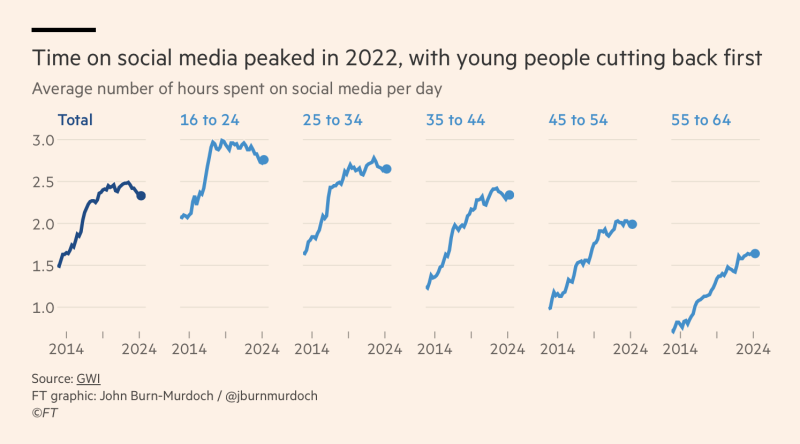
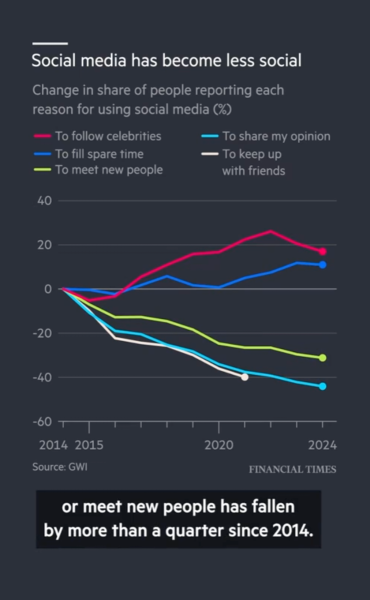
This is also confirmed by the Financial Times (read more, watch more). Small side note: I read that TikTok wasn't included in this data, but I'm not sure, since I don't have access to the original research.
- Average time spent on social media of 2h20 minutes a day is still considerable, but down 10% from the peak in 2022. The steepest decline amongst the heaviest users: the 16 to 24-year-olds.
- Social has become less social. From a place to connect to, it's now social is a place to fill spare time with mindless browsing.
- This trend is also visible in the declining engagement on your posts and algorithms that continuously adapt, balancing between your social connections and the relevance of the content and their own commercial objectives.
Why it matters
Unplugging is more than a trend. It shows that people want less noise and more real life. Gen Alpha and Gen Z are leading the way. They choose nature, hobbies, and time with friends over screens.
→ This is part of a bigger shift: a move away from fast, fake, and flashy (and from AI).
People want brands that help them slow down and feel good again. The ones that do will stand out because they make life better, not busier.
What to do as a brand, what this means for your content
Create calm, not clutter. People are tired of being chased by content, HubSpot email flows, or highly targeted and hyper-personalized paid social advertising.
Your audience want fewer messages, more meaning, and space to breathe. Use content to add value, not volume. Think simple formats, slower storytelling, and a real human tone, less AI.
→ The future of content isn’t about being louder; it’s about helping people feel more human again.
Besides all of this, we’re in a bizarre era with tension between what brands do and what consumers want.
- Brands are cranking out AI-generated content, slapping a ‘next-gen’ label on it, and calling it evolution.
- While consumers are in the comments screaming, 'This is slop.' (Because it is.) Slop = AI junk content. Content that looks sleek on the surface but is creatively bankrupt underneath. Technically impressive, but lacks any real creative or human value.
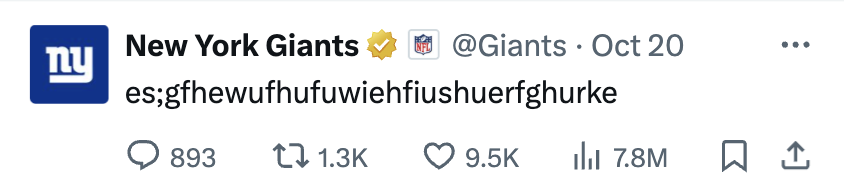
If you want your brand to appear human, make a mistake (on purpose). We are tired of the perfect, polished AI content.
Check out the New York Giants ‘mistake’ keyboard slamming post below. 7.8M views and counting.
My advice for your content in 2026: invest in strategy and expect lower ROI
For the C-suite, this means declining ROI from social, rising consumer demand for physical experiences, and a renewed push to cut content bloat. Many brands will use AI to chase speed. Smart ones will use it to deepen their thinking, not replace it.
→ Invest in and obsess on your strategy and identity. Think and write by hand. And improve all of that with AI. Not vice versa.
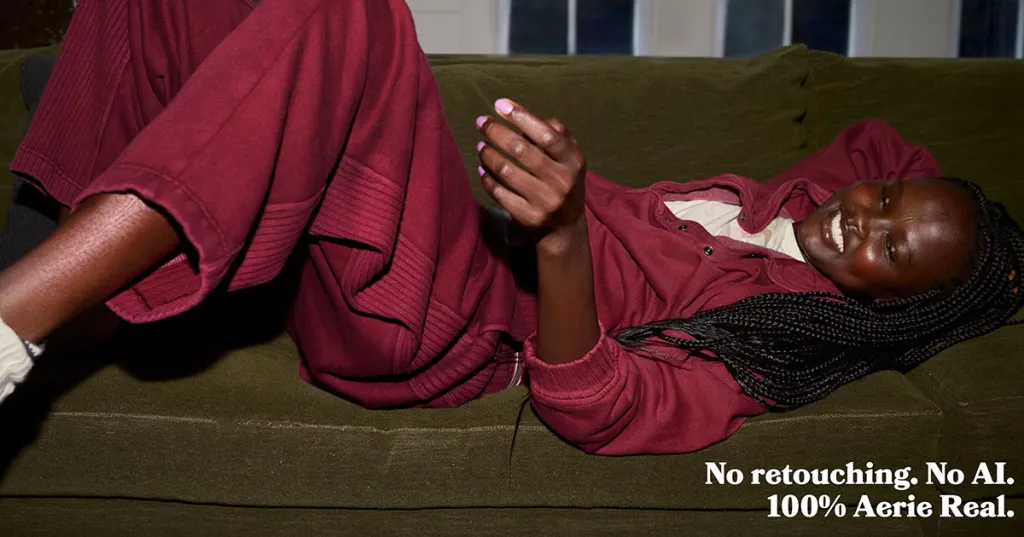
Or think different, don't use AI, and make that one of your USPs.
Like Aerie, they stopped retouching in 2014 and are now committed to no AI-generated people or bodies in their content and campaigns.
Wrapping it up
2026 marks a shift back to what feels real. People are tired of filters, noise, and fake perfection. They want quiet confidence, real connection, and moments that don’t need to be posted.
Unplugging isn’t about rejecting technology; it’s about rebalancing it.
For brands, this is the time to edit ruthlessly.
To make less, but mean more. To swap the dopamine hit for long-term trust.
The future of relevance won’t come from algorithms or reach—it’ll come from resonance.
Are you ready?
Subscribe for more marketing, content, and AI insights
If you like to get smarter and stay up to date, based on insights and research, and how this matters to you, subscribe to my LinkedIn newsletter.
Two-click subscribe, and one-click unsubscribe if it's not for you.
Easy does it.
Please share your feedback in a comment or via email to help me create better content for you.
Sources
GWI 7, Gen Alpha characteristics to know for 2025
Razorfish Study Unveils Generation Alpha Insights, Preparing Brands for the Next Consumer Cohort
Marketing and content trends 2026: ‘Unshittification’, intentionality and escapism
Social media fatigue is real, here’s what actually helps
The Drum, Cannes Lions 2025: View all the Grand Prix-winning ads
WARC, Creative Impact unpacked
WARC, Cannes Creative Effectiveness Lions 2025
WARC, Creative Impact Unpacked: What we learned at Cannes Lions 2025
WARC, How to achieve the multiplier effect in China
WARC Consumer Trends 2025: Five shifts shaping consumer spending
Kantar, Cannes in a can: Refresh yourself with the top 5 takeaways from Cannes 2025
Nielsen, Conversations from Cannes
Cannes Lions, Need-to-know numbers
Cannes Lions, the official Cannes Lions wrap-up 2025
Love the work, Winners and Shortlists
Adweek, The Cannes Lions 2025 Controversies Casting a Shadow Over Big Awards
The New Yorker: Are You Experiencing Posting Ennui?
The New Yorker: Why posting on social media has become something of the past
Tracksuit, Make Waves in the Sea of Sameness
Tracksuit, From Awareness to Effectiveness
Tracksuit, Track the Field Report
The Philosophy of Online Manipulation
When Good Algorithms Go Sexist: Why and How to Advance AI Gender Equity
Evaluating Gender Bias in Large Language Models in Long-term Care,
 Powered By PressPage