


The difference between agents and agentic, clearly explained
It all starts with a prompt and ends with a system that runs itself
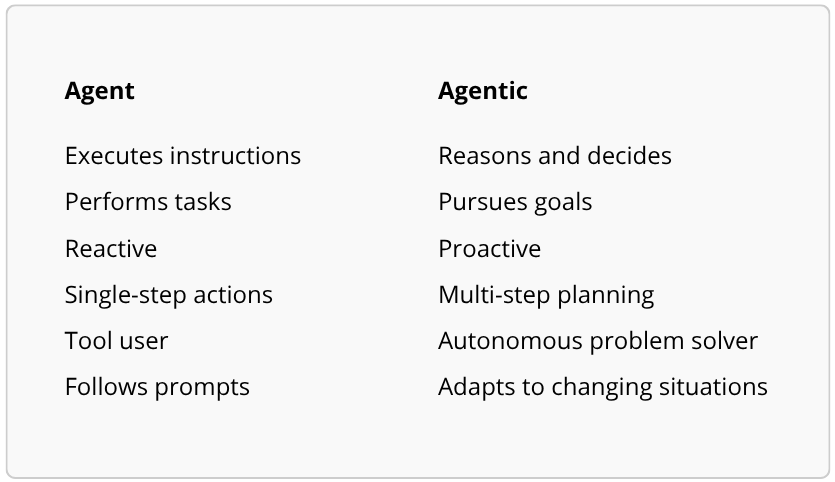
Agent. Agentic. Everyone uses both words. Almost nobody means the same thing when they do. They're related. They're not interchangeable.
→ Two letters between agent and agentic. And three skills standing between you and a system that runs itself.
Nobody explained it clearly. Until now.
Prompting → one input, one output, every time
You write the prompt. AI responds.
Nothing runs without you. And you start from scratch every time, new question, new prompt.
→ Realize that your bad prompt doesn't stay bad. It travels. Into your agent. Into your agentic system.
Agent → build it once, let others use it
You invest time upfront. Write the prompt once, configure that in the agent, and it's ready.
You can share agents with your team. They don't need to know how the agent works. They just give it input. The agent does the thinking, based on the prompt you’ve built into its settings.
→ Someone still presses ‘go’.
Agentic → runs by itself
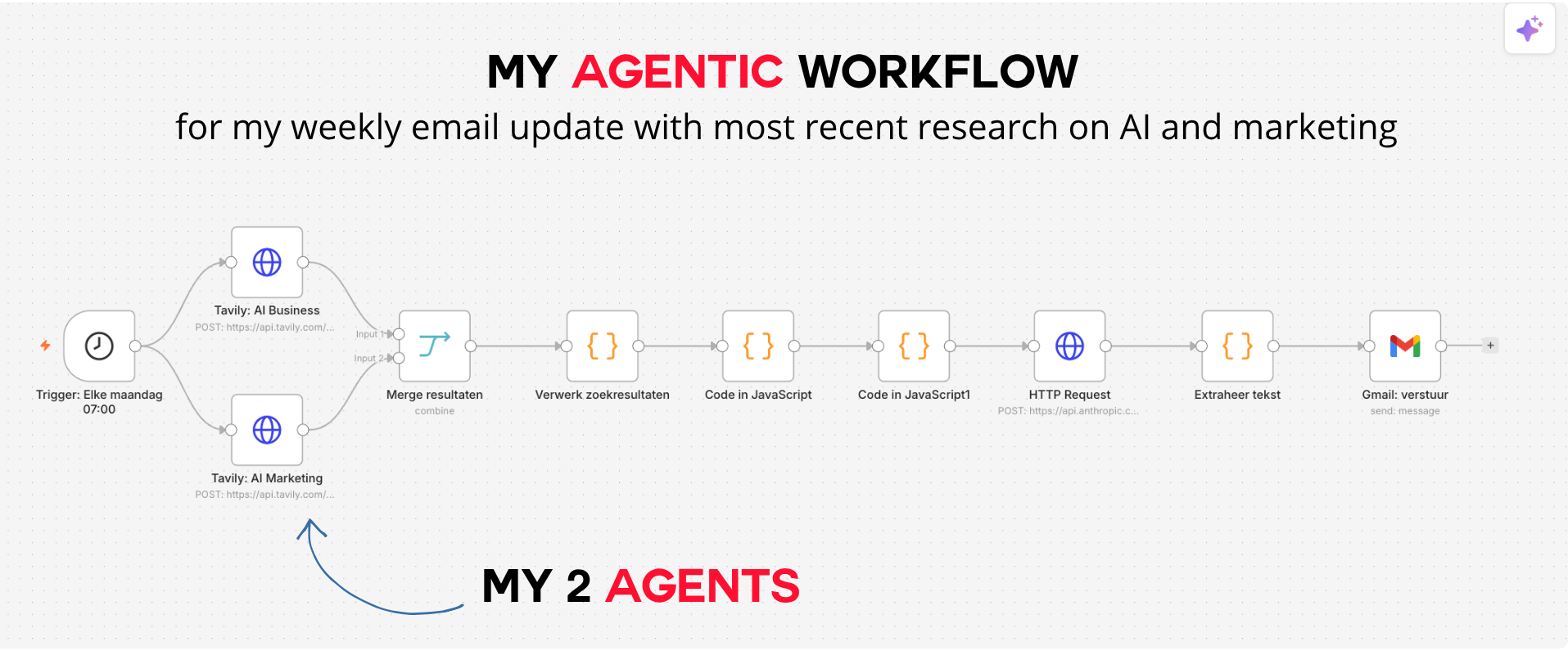
The agent is the basis of agentic. The only difference is what starts it. For agentic, that's a scripted trigger based on ‘if this, then that’.
→ Build once and it completely runs by itself. That's agentic.
The agentic logic can chain multiple actions.
- If it's Monday 7am (the trigger),
- then the agent pulls last week's most relevant updates on marketing and AI from trusted sources, gives it context and meaning, sends it from my gmail, and lands them in your inbox.
- If a new email arrives from a potential client (trigger),
- then the agent creates a project folder, drafts a reply outline, and drops a bespoke pitch deck in the folder. Ready before you've opened your inbox.
Agentic requires new skills and responsibility. To decide what condition triggers it. And to build the logic that runs without supervision; safe, reliable, and auditable.
Skipping steps and skills breaks it
Prompt to agent to agentic is a clean model with sequential skills. You need to master the first, before you can move to the second.
In practice, organisations skip steps. The tools make it too easy. But automating something you don't fully understand makes it harder to trust the output, audit the process, fix what breaks or even update it.
→ The order from prompt to agent to agentic exists for a reason.
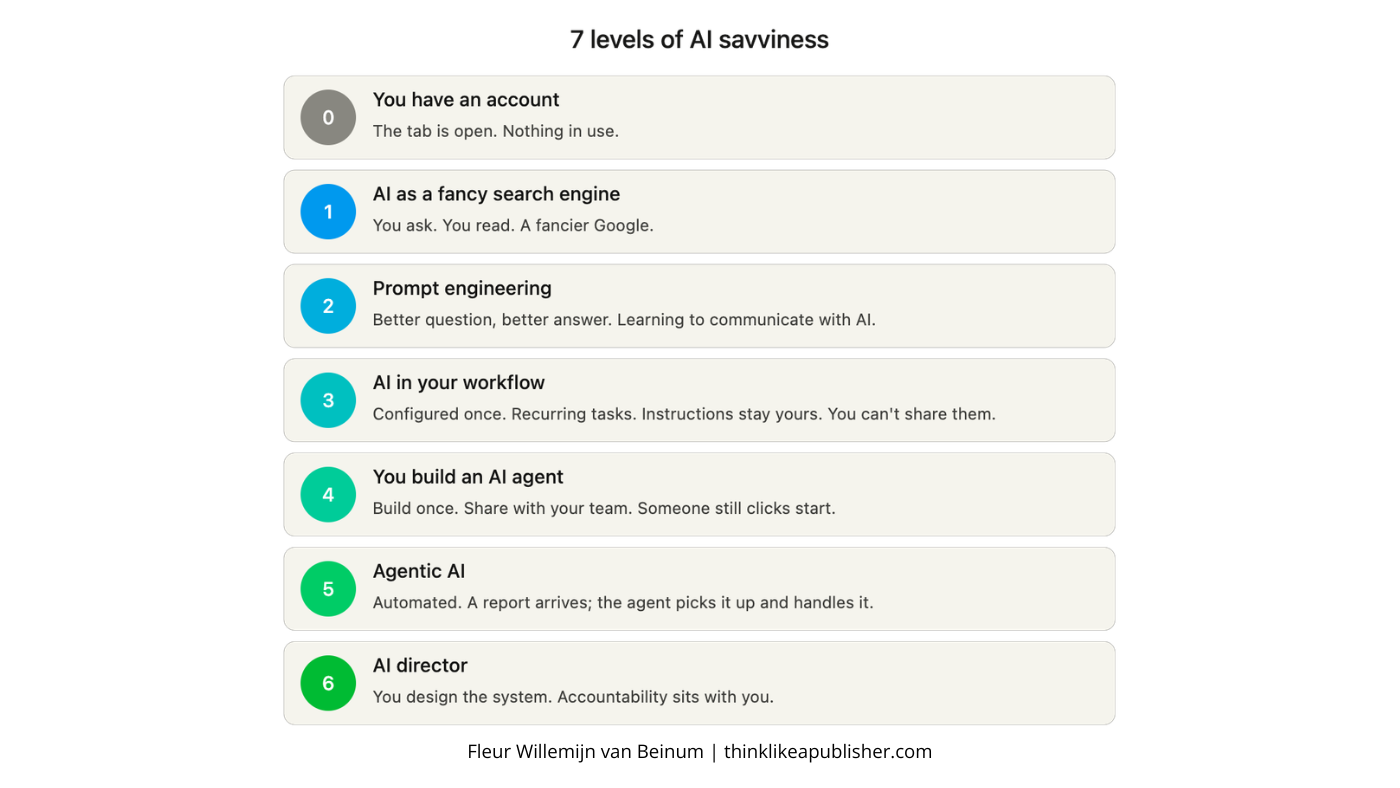
Read more about the 7 levels of AI.
More skills, more return
Each level is a different discipline with progressive skills. Prompting is about talking to a machine. That's communication. Building an agent is about configuring a system. That's design. Agentic is about logic, triggers, dependencies. That's architecture.
Each level asks more. Each level returns more. The order is not optional.
Join 2,500+ professionals
Most content advice tells you what to do. This tells you how to think. For marketers and communicators who want the difference.
Free. Unsubscribe anytime.
 Powered By PressPage