

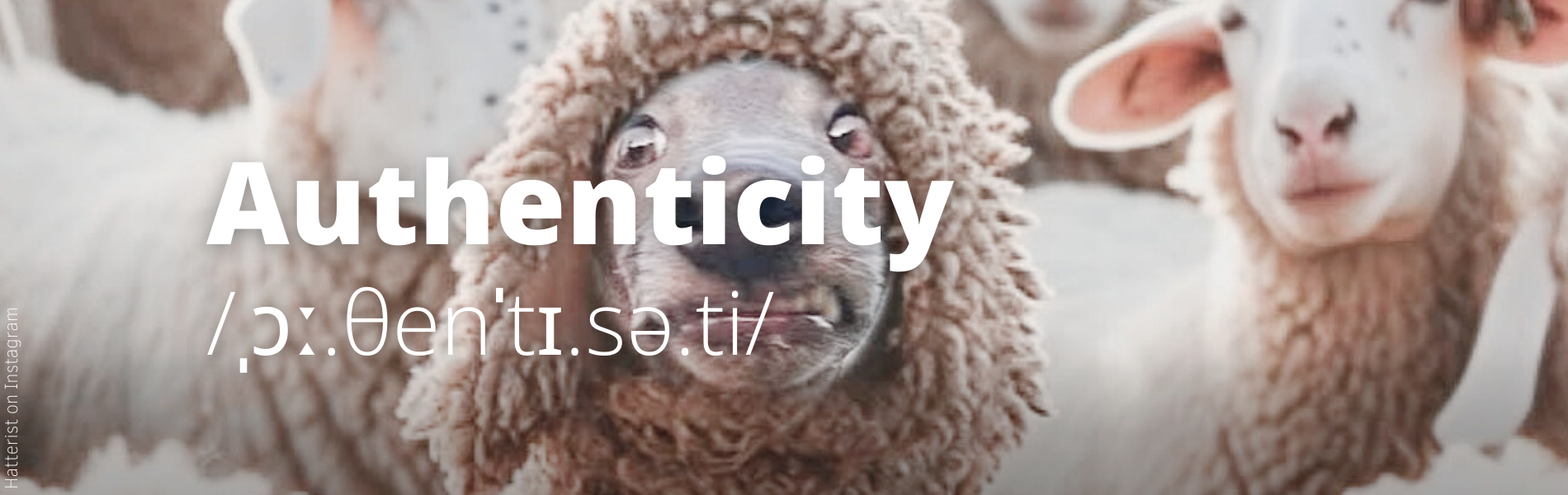
Authenticity explained: 3 reasons why everything looks the same, and how to break the AI and algorithmic mold
What you must do to stand out and be authentic in today’s world
We all know that authenticity matters, and we strive to be authentic. But still, most of the content looks the same.
How to break this algorithmic trap? There are 3 major causes of today’s homogeneous society
→ Why everything looks the same, and what can you do:
- We’re too busy and focused on efficiency
Solution: make time and prioritize what truly matters to you. For example, block 10% of your and your team's time for exploratory creative work. You only regret the things you didn’t do
- Algorithms enable and strengthen homogeneity
Solution: don’t buy into that and all the s**t you see online. Keep thinking for yourself to decide what matters to you
- AI, it’s a summary of the internet, and here to keep you happy
Solution: personalize your AI and use it to challenge and improve, not to do the work for you
Let's look at the details.
1. We’re too busy and focused on efficiency
This is a tough one, and it hurts. As a society, we are so focused on getting more done in less time.
→ Efficiency kills originality
I notice this in my business and personal life.
- In business, that means we often don’t take and can't make the time to go down rabbit holes, do proper research, build our own rationale, or form our own point of view. Instead, we copy-paste what others think and do, make a few tweaks, push it out, and then move on to the next thing on our agenda.
Or it takes forever for people to respond and take action, not because they don’t want to, but simply because they have too much on their plates. And before you know it, the momentum and opportunity are gone.
- On the personal level, it hurts even more. But in recent years, doing anything last minute feels like a luxury, grabbing a quick coffee, going for an unplanned lunch, or even having a sweet 5-minute call to hear someone’s voice.
Everybody seems to be too busy and forgets to live in the here and now. The priority is getting more done in less time and be efficient as possible, instead of enjoying a bit more of the precious moments that will never come back.
2. Algorithms enable and strengthen homogeneity
We think we can decide what we see and read. Still, in reality, it’s really very hard and you have to make a serious effort to dive into the crooks and crannies of the media to discover new and different views and opinions that go against the status quo and shine a different light.
→ Algorithms reward sameness
You only have to look around you to realize that everyone thinks and looks alike.
- Thanks to algorithms, we’re spoon-fed the same trends, views, insights, and opinions.
Algorithms push engaging content and hide the rest, so we all read, view, and listen to the same things. Next to that, we all use the same templates to create our content.
- Thanks to TikTok, where hyper-fast micro trends in fashion follow each other at an increasingly rapid pace.
It's not just social, it's broader. We know that Meta, LinkedIn, and TikTok do this. But do you also realize that Netflix and Spotify do the same? And what about the news and publishers? They create content that gets the most eyeballs so they can sell the most ads.
3. AI is not helping here
AI enables you to do more in less time: summarize chunky content in a few bullets, or produce your content with a prompt.
→ AI is a summary of the internet based on data and the common denominator. It is here to keep you happy, not to challenge you. And it flattens your (brand) voice.
If you don’t take the time to personalize and configure your AI, and learn how to prompt properly, it will feed you and produce generic content.
And before you know it, without being consciously aware of it, AI can make you overreliant and a bit lazy, because it does all the work for you.
There are 2 things you can do to break this cycle. So you can stand out and show your personality, as a brand and as a business. After all, people want to do business with people, not with big anonymous institutions or AI.
Break the mold: realize the ones we admire are the ones who are different
It’s human nature to want to belong, to be part of a community. A community where we share the same values, and often also think and look more or less the same.
However, the ones we admire, the ones who changed history, are the ones who dare to be different. A few examples.
Women who radically own who they are
Leading by example.
- Brigitte Bardot. Refused to be just a muse. Wild, political, unapologetically herself
- Brené Brown. Turned vulnerability into leadership. Made soft power feel strong
- Coco Chanel. Gave women freedom, in fabric, form, and mindset
- Marilyn Monroe. Controlled the myth, stayed real underneath. Softness as rebellion
- Michelle Obama. Showed us how power can be warm, honest, and bold
- Oprah Winfrey. Built an empire on truth, connection, and unapologetic presence
- Vivienne Westwood. Fashion as protest. Loud, raw, punk, and always herself
Men who inspire by being 100% themselves
Let them inspire you.
- Anthony Bourdain. Told the truth behind the food. Messy, human, real
- Arnold Schwarzenegger. Always reinventing. Big dreams, bigger energy, bold moves
- Banksy. Quiet on purpose. Art loud enough to move cities
- David Bowie. Shape-shifter. Space-maker. A masterclass in being other
- Elvis Presley. Mixed danger, desire, and sound. Changed music forever
- Prince. Every label ignored. Every inch his own. Art as identity
- Salvador Dalí. Brilliantly weird. Made imagination rule the rules
To do: dare to be different
It takes balls and courage to stand out. After all, the tallest trees catch the most wind.
Besides having the courage to stand out, you also need to be willing to invest time. Time to build a solid vision and point of view, grounded in data and research, expressed in your own voice, with a clear message and easy-to-read copy.
Lastly, you also have to challenge the (business) rules. As a brand, you don’t go for the mass market where everyone likes you. You aim for a select audience that shares the same values and is therefore willing to buy your product.
As an individual, that means that you’ll have to guard yourself against today’s often toxic online culture, where keyboard warriors are quick to voice their opinions.
Think about Brene Brown, who wrote about ‘the man in the arena’ by Roosevelt: ‘It’s not the critic that counts…'.
Key takeaway: it's time that you do you
We know we love and admire the ones who are different. Why not give it a go yourself? Stand out, be authentic, you do you.
Now that you understand why the world is becoming increasingly homogeneous, you can use this knowledge to swim against the current and stand out because of it. And become admired for that.
- We’re too busy and focused on efficiency
Solution: make time and prioritize what truly matters to you. For example, block 10% of your and your team's time for exploratory creative work. You only regret the things you didn’t do
- Algorithms enable and strengthen homogeneity
Solution: don’t buy into that and all the s**t you see online. Keep thinking for yourself to decide what matters to you
- AI, it’s a summary of the internet, and here to keep you happy
Solution: personalize your AI and use it to challenge and improve, not to do the work for you
Now, it's up to you. In a world of sameness, originality is your greatest ROI. Don’t blend in. Break the mold.
Image credits: Hatterist
Subscribe for more marketing, content, and AI insights
If you like to get smarter and stay up to date, based on insights and research, and how this matters to you, subscribe to my LinkedIn newsletter.
Two-click subscribe, and one-click unsubscribe if it's not for you.
Easy does it.
Please share your feedback in a comment or via email to help me create better content for you.
Confessions of a Content Strategist
Someone tells you it's AI-generated. You've already decided: low effort, low quality. And you haven't read a word yet.
You're not entirely wrong. A lot of AI content is bad.
But you're wrong about why.
Scanning copy for em dashes like they're evidence of AI? Let's be honest about what that is. It's lazy. The same kind of lazy as writers who let AI write for them without thinking. You're just doing it from the other side of the …
The AI problem isn't awareness. It's that nobody at the top knows where or how to start. So they don't. AI isn't a tool problem. It's a thinking problem. And it can only be solved from the top.
Now, they accept what …
The market is drowning in content. And marketing's response is to make more. AI made it cheaper, so the assumption became: produce more, reach more, grow more.
But volume was never the problem to solve. And ‘more’ has never been the answer.
Using AI for content production can save you up to 40% of your time. This sounds like the magic trick to lower the costs of your content team, right?
Well, sorry to bring the bad news; it isn’t.
→ Yes, …
How much content do you need? It’s much less than you think. About 10% of your content drives 90% of your traffic. If that isn’t 5-95 by now, thanks to AI overviews now replacing clicks in Google search results.
We’re in …
 Powered By PressPage